"Luxury is a real profession!" – Alain Dominique Perrin (Sup de Luxe)

September 21, 2016, by Olivier Rollot – Lemonde.fr
"Luxury is a real profession!" – Alain Dominique Perrin (Sup de Luxe)
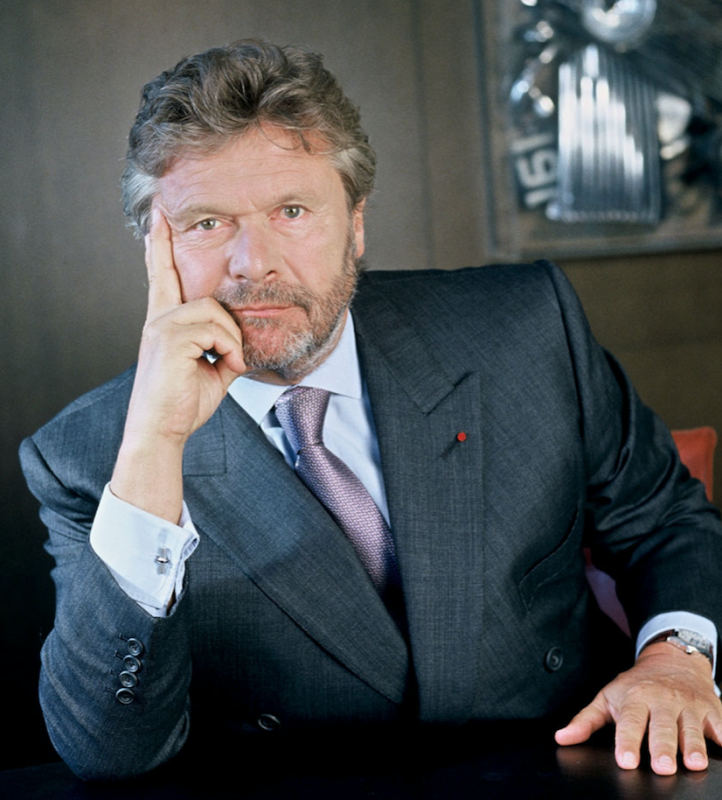
Alain Dominique Perrin—founder of Sup de Luxe, president of EDC Paris Business School, and the man who created and currently chairs the Fondation Cartier—welcomes us to the foundation’s eighth-floor offices. Before acquiring EDC (his alma mater) alongside other alumni in 1995, Perrin had served as president of Cartier and later as vice-chairman of Richemont, the world’s second-largest luxury group. Today, he is more committed than ever to passing on his passion for luxury and beauty to the younger generation.
Olivier Rollot: Luxury captures the imagination of young people more than ever, both in France and around the world. In fact, Sup de Luxe—the program you established at Cartier in 1990—has just seen its first class graduate in Switzerland. However, isn't there a risk today of training too many young people for the luxury sector—a concern you yourself raised in an op-ed piece?
Alain Dominique Perrin: In Geneva, we offer our MBA in Luxury Business Development, a highly specialized industry-focused program that is graduating its first 15 students this year. In Paris, we have offered a specialized MBA for over 25 years—one that is consistently ranked number one. We also offer a program taught entirely in English for international students (running for three years now) and a bachelor’s degree program (running for two years) that trains a different type of professional—one more likely to start out working in retail "corners" or boutiques. We know that, for all these students, a job will almost certainly be waiting for them upon graduation. That is because this is our field of expertise, and we have the professors, networks, internship opportunities, and more to back it up! However, that isn't necessarily the case with every luxury training program—or even with some well-established schools. Right now, France is training 2,000 students for the luxury sector at the master’s level, yet there are only 250 such jobs available worldwide—mostly in Europe—each year! Consequently, most of these young people will have to work elsewhere and will face disappointment. That is why I have spoken out against these "peddlers of dreams and diplomas" who profit from young people while knowing full well they cannot keep their promises. We need to regulate the curricula of schools that sell specializations they cannot actually deliver. It is easy enough to specialize in merchandising, supply chain management, or crisis management, but when it comes to luxury, there are very few qualified instructors—and they all work for us!
O. R.: What should characterize luxury education?
A-D. P.: It is essential to understand that this is a genuine profession spanning everything from design and manufacturing to communication and distribution. It is a field where you must master customs duties to set consistent global prices and avoid creating parallel markets. It is a profession requiring particular vigilance regarding counterfeiting (our Swiss school actually fell victim to this at the hands of a competitor!). You need to understand the mechanics of both duty-free sales and distribution channels. You have to envision new markets: Australians are now embracing luxury, and we are seeing magnificent shopping malls spring up featuring all the major brands. Yet, this could have been predicted simply by observing the improving quality of their wines. Do you really think schools just jumping into the luxury sector know how to teach all of that?
O. R.: What do you expect from graduates leaving Sup de Luxe?
A-D. P.: To begin with, we reject a large number of applicants during the oral selection interviews; our cohorts are becoming increasingly female—up to 80% today! I am not involved in the selection process, but I play a very active role at the end of the program when students defend their theses. At that stage—given that we have provided them with every resource and enabled them to meet top-tier professionals from companies like Hermès, Cartier, and Kering—I set very high standards. I expect them to submit work that is substantive and rich in information.
O. R.: How would you define luxury?
A-D. P.: First of all, one must not confuse luxury with money. Many people assume that a high price tag equates to luxury, whereas luxury is rooted in culture. Fundamentally, a luxury item is the result of a creative process—embodying the brand’s soul—and is crafted according to the brand’s own specific standards. A luxury product is, above all, a product of creativity and emotional connection; it is built to last. In this regard, Patek Philippe’s advertisements, which focus on "passing things down" to future generations, are truly admirable. The strength of great luxury brands lies in their ability to create works of art worthy of museum exhibition. And indeed, we French—who are not primarily known as merchants—possess the creative DNA essential for success in the luxury sector.
O. R.: Let’s step back a bit. What prompted you to create Sup de Luxe within Cartier in 1990?
A-D. P.: The idea came to me after a lecture I gave on luxury at Sciences Po in 1989, which attracted a large number of students who were absolutely passionate about the subject. I immediately called Cartier’s Managing Director for France to propose founding an in-house school. It primarily catered to our own executives but also accepted five or six external participants in each class of 25. In 1998, we entrusted the development of Sup de Luxe to EDC, as that was their area of expertise. Since its inception, all the key figures who shaped the French luxury industry—such as Jean-Louis Dumas of Hermès, Hubert de Givenchy, and the heads of Balenciaga, Boucheron, and others—have lectured or taught classes there. I did all of this out of a sense of calling—not to make money, but to ensure the profession was better recognized.
O. R.: By taking over EDC in 1995, you became a higher education professional.
A-D. P.: I have been passionate about education for 21 years and have truly dedicated myself to this school. I am very proud to have raised EDC to the highest level without ever receiving a single cent in state subsidies! Along with the other alumni who joined me in acquiring EDC, we define ourselves as "education entrepreneurs." It was no coincidence that we immediately decided to position EDC as "the school for business leaders and entrepreneurs" and adopted the "HEC Entrepreneur" method long before other schools began talking about entrepreneurship. Today, we also aim to expand our research into entrepreneurship with the support of Professor Jean-Pierre Helfer.
O. R.: Do you plan to sell the school one day?
A-D. P: We didn’t save EDC just to cash a check and lose interest in what happens next. We have turned down numerous offers from investment funds because we do not want to see the school transformed into a profit center at any cost, only to be resold after five or seven years. We are in no rush; the ideal partner would be a "family-owned" group—one that invests for the long term and is capable of making enduring commitments, in stark contrast to the investment funds operating today.
The *Institut Supérieur de Marketing du Luxe* (Higher Institute of Luxury Marketing) was established at Cartier in 1990 to address the sector's emerging needs regarding business development and global expansion. Since then, "Sup de Luxe" (the Cartier Chair) has developed industry-specific training programs in collaboration with brands:
– A Bachelor’s program specifically dedicated to commercial roles within the luxury sector, with an intake of 50 students. Cost: €8,500 per year;
– A specialized MBA in Luxury Brand Marketing and International Management, open to students with three to five years of higher education who possess the aptitude and desire to pursue careers in marketing, merchandising, retail, export, digital, legal affairs, communications, journalism, creative work, and design.
To date, there are 2,000 graduates across 44 countries, many of whom hold brand management positions.
One-year program, 50 places. Cost: €16,500;
– An MBA in Global Luxury Brand Management. Taught in English and limited to 15 students from the countries where these brands are expanding, aiming to meet local hiring needs. Cost: €26,000;
– An MBA in Luxury Business Development, created in Geneva to offer a specialized industry program in a country renowned for its watchmaking expertise and luxury hospitality tradition. 15 students. Cost: CHF 19,000
http://orientation.blog.lemonde.fr/2016/09/21/le-luxe-est-un-vrai-metier-alain-dominique-perrin-sup-de-luxe/

Comments0
Please log in to see or add a comment
Suggested Articles