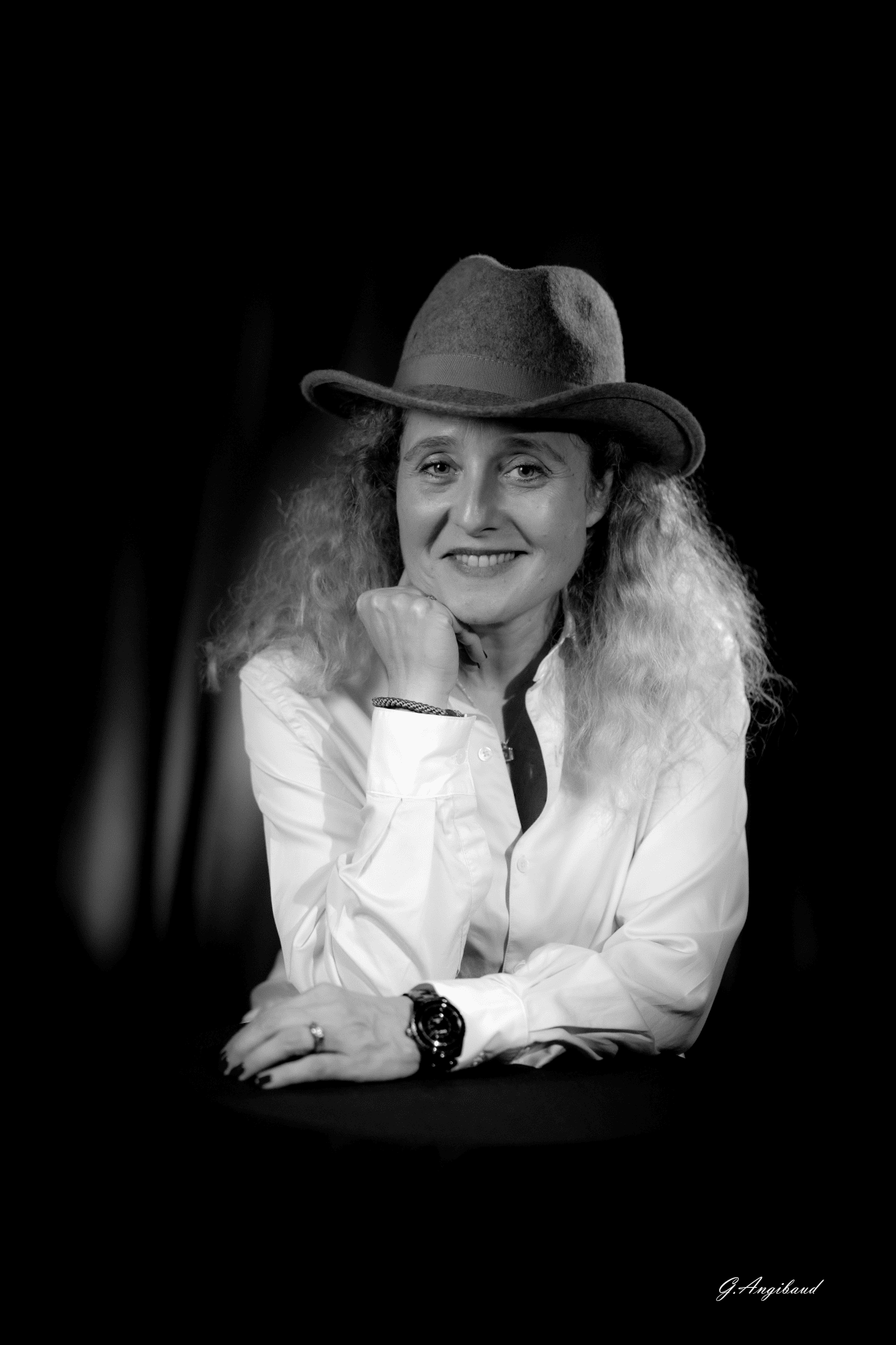
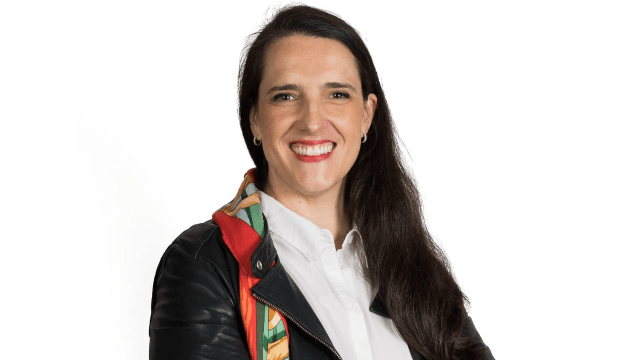
The full interview with Sophie Breart-Delalande, Class of 2001 alumna and Director of Learning & Development at Givenchy Couture.


Sophie BREARD – DELALANDE
Learning & Development Director – Givenchy Couture
We meet at the Givenchy Couture headquarters on Avenue George V.
Sophie arrives with a smile and a direct, open gaze;
her handshake is warm.
A wonderful Sup de Luxe alumni encounter lies ahead!
Interview by Laetitia Grognux
Hello Sophie, and thank you for granting us this interview for the new Sup de Luxe Alumni newsletter.
You are a 2001 alumna; what memories do you have of your year in the Sup de Luxe MBA program?
I have very happy memories of it—of meeting experts and making friends. It gave me an understanding of luxury sector roles—or, more precisely, of how those roles are actually experienced within the industry. It is a world governed by strict codes; you have to immerse yourself in the culture. Image, soft skills, craftsmanship... Unspoken rules play a major role and are key to fitting in.
The year at Sup de Luxe serves as a gateway to all of that, ensuring you feel well-equipped.
What did it give you in concrete terms?
It gave me confidence when presenting myself to recruiters.
You have been working in Learning & Development within the LVMH Group for 10 years (3 years at Givenchy and 7 at Dior), and prior to that, at Shiseido. What excites you most about this profession?
For me, it is one of the most open roles in the company because it represents a hybrid of communication, marketing (product and operational), sales, and human relations. This cross-disciplinary approach is exceptional in an environment where companies are often highly compartmentalized. We act as storytellers and internal role models, capable of fueling team motivation. It is personally enriching, too.
What role does digital technology play within the Learning & Development department of a fashion house? Digital tools allow us to showcase the House and its creations to our internal audiences, just as a website does for customers.
At Givenchy, we use digital technology for training as a "living library"—something halfway between a news feed and a magazine. It is more about sharing information than formal training. It allows us to tell a story, deepen the emotional connection, and inspire teams regarding the key points to highlight when suggesting a piece to a client. The major benefit is that it allows us to delegate the transmission of knowledge and refocus the training teams' mission on "action learning" and client relationships.
We paid great attention to the app’s aesthetics to foster a sense of pleasure and enchantment when discovering the creations. No matter how beautiful the pieces are, seeing them every day can easily lead to a sense of routine or indifference among the teams; we work hard to keep that spark alive.
What has been the biggest challenge of your career?
While developing a training department, the challenge was demonstrating to decision-makers the positive impact training has on the business, the customer experience, and brand perception—all stemming from the care and attention shown to the teams, especially those in retail. For executives, training can seem like a nebulous concept—and, to be fair, it often is.
You undoubtedly need a pioneering spirit. Perseverance pays off, because once things start moving, everyone wants to get involved in training. The trickiest part is convincing people without forcing the issue. For me, the secret lies in having a deep, personal conviction—confronting reality and demonstrating the difference training can make. Tangible results help foster this realization. Many functions claim credit for success, yet training is rarely recognized as a primary key factor. However, I have two examples in mind: two product launches—one at Dior and the other at Givenchy—neither of which benefited from a press, communications, or product placement campaign. Their only support was training. In both cases, the success was resounding, achieved thanks to the teams prepared by the trainers.
What do you consider the essential qualities for advancing within a fashion house?
I mentioned perseverance earlier...
The ability to step back: these houses are whirlwinds of activity; it is easy to get swept up in the current and slip into a mindset of merely executing tasks.
Regularly questioning the value one can create.
There is an element of interpersonal skill—a form of etiquette—that, for me, relies heavily on listening. People don’t listen to one another (or no longer do). The moment you start listening, everything opens up. Everything becomes possible. It is a tremendous quality.
Keeping a cool head and maintaining a beginner’s mindset often sparks creativity and innovation.
Having courage and daring to act. It is a vital quality that has become increasingly rare these days. That is a shame. It has never once worked to my disadvantage.
Bringing people together so you don’t stand alone. Ego leads to isolation; fostering unity drives progress.
How do you envision your profession ten years from now?
I think that as the world accelerates, our profession will increasingly refocus on the human element and on how we nurture relationships—between the fashion house and its teams, among the teams themselves, and with clients. We will help create the conditions essential for engagement and the realization of potential.
I believe in the progress that collaborative work can generate. I have a feeling that, in the future, we will help foster cooperation to enhance the client experience.
Do you believe in destiny?
I believe in a grand, interconnected whole—independent of any religious context. I believe that nothing happens by chance and that we are the architects of our own destiny. I believe in congruence, synchronicity, and resilience. Did luck play a role in your career?
No. I took risks—boldly and often. They were calculated risks, always driven by my convictions. There were very tough times, but they were rich in lessons. I always try to turn a difficulty into an opportunity; it’s a mindset. There are no opportunities without uncertainty.
What message would you like to share with recent Sup de Luxe graduates?
Ask yourselves what kind of professionals you want to be in five years and consider the steps that will help you move toward that vision. Don’t let yourselves be boxed in by certainties; allow yourselves to be surprised. Change is constant, so you will need to adjust your path as you go—and, above all, ensure you keep learning from every experience, taking the best from them to grow. The important thing is to try.
I’ll end with a piece of advice: savor the world of luxury, but don’t let it become a gilded cage. Stay open to what is happening outside the industry so that you can keep progressing.

Comments0
Please log in to see or add a comment
Suggested Articles